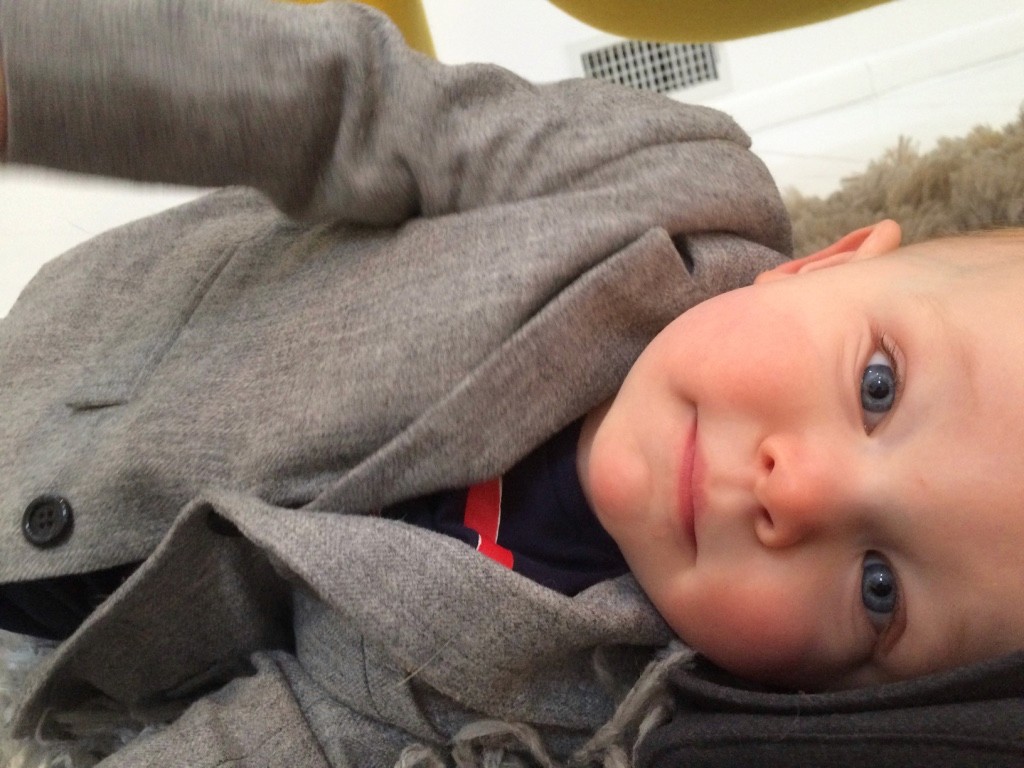
Why the Best Newborn Care Starts With Watching, Not Fixing
"Before you reach in, rock, feed, or fix, there is one thing worth doing first."
It usually happens around 2 a.m. Your baby stirs, makes a sound, and your body moves before your mind does. You reach in, you rock, you feed, you fix. The instinct is loving and powerful. It is also, sometimes, the very thing that gets in the way.
There is a gentler starting point, and it is surprisingly old.
A method built on watching
In 1948, a child psychoanalyst named Esther Bick introduced a practice at the Tavistock Clinic in London called infant observation. Working alongside John Bowlby, the psychiatrist who would go on to shape modern attachment theory, she asked her trainees to do something that sounds almost too simple: visit a baby at home, once a week, for one hour, and simply watch. No notes during the hour. No advice. No intervening. Just careful, patient attention, written down only afterward and reflected on with others later.
Bick's insight was that you cannot truly help a baby you have not first understood, and you cannot understand a baby you are too busy managing to see. Observation came first. Everything else grew out of it.
Her method spread far beyond that one clinic. Today, infant observation in the Bick tradition is a core part of how child psychotherapists are trained around the world. But its real lesson was never only for professionals. What she showed is that close, unhurried observation changes the observer. Watching a baby attentively, without rushing to label or fix, builds a rare skill: the ability to sit with not-knowing for a moment, to stay calm in uncertainty, and to let understanding arrive before action does.
What your baby is already telling you
Why does a practice from 1948 matter for you, at home, tonight? Because newborns communicate constantly, long before words. They speak in the rhythm of their breathing, the quality of a cry, the way they settle or stiffen, the small pause before they fuss. Those signals are easy to miss when every sound triggers an immediate response. A baby working their way back to sleep can look, for a few seconds, exactly like a baby who needs you. The difference is only visible if you watch.
This is the heart of what we mean by observe before you act. It is not detachment, and it is certainly not leaving a baby to struggle. It is the opposite. It is paying such close attention that your response, when it comes, actually fits.
One mother of twins we worked with, a physician used to acting fast, put it plainly. Her instinct was to rush to every cry; tending each sound felt like love. The real change in her household came when she learned to pause first, read what was actually happening, and respond to that. He "trained us every night," she wrote, as much as he trained the babies. Within weeks, the guessing had stopped.
How observation works in your home
This is exactly how I work. Before changing anything, he watches: how your baby feeds, how they wake, how they move between states, what your family's days already look like. Only then does a plan take shape, built around your baby, not borrowed from a template. Families describe his presence as calm and unobtrusive; a child and adolescent psychiatrist who brought him in for her own daughter noted how seriously he took the quality of every small interaction. The observation is not a clinical exercise. It is what makes the care fit.
There is one more thing Bick noticed, and it is worth holding onto. She found that families were quietly helped simply by having someone in the room who could watch their baby with genuine admiration, someone who noticed what was going well. New parenthood is loud with advice and short on that kind of attention.
The confidence that comes from seeing clearly
Your intuition is not missing. It has usually just been crowded out by noise, by exhaustion, by the pressure to fix everything at once. Observation is how you get it back. You watch, you learn your baby's particular language, and slowly the panic of not-knowing gives way to the quiet confidence of recognizing.
So the next time your baby stirs at 2 a.m., try one small thing first. Pause. Watch for a moment. Let your baby show you what they need before you decide.
Then act, with intention, and with the calm of someone who already knows.
Curious what observation could look like for your family? Reach out for a consultation. We begin every relationship by watching, listening, and tailoring care to your baby.