My name is Ulisses
On names, wanderers, and how Homer accidentally trained a newborn care specialist.
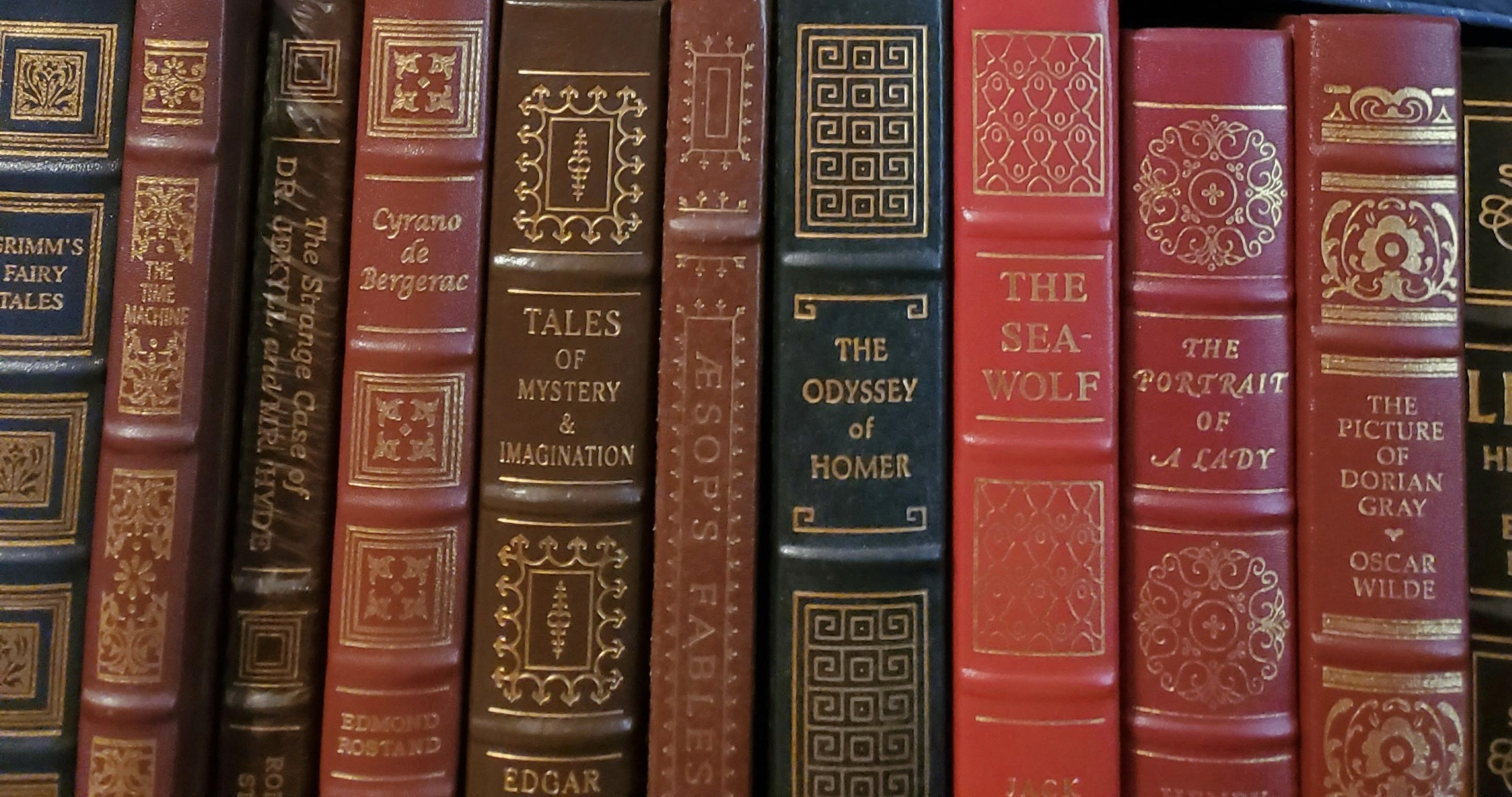
In Portuguese, it is the same name Homer gave his most famous wanderer: Odysseus in Greek, Ulysses in English, Ulisses in the language of my childhood in Brazil. My father, a functional illiterate who had never read the poem, spotted James Joyce's Ulysses on his sister's shelf one day, liked the sound of it, and told my mother while she was pregnant: "I want our son to be named Ulisses."
He did not really know what he was giving me. He did not know he was handing me the name of the greatest Greek hero: the smartest, the most resourceful, the one who survived everything not by force alone, but by patience and wit and the stubborn will to get home. He simply liked the way it sounded.
He was, as fathers sometimes are, more right than he knew.
I have crossed an ocean, learned a new language without anyone to translate it for me, walked through trauma bays, NICUs, and PICUs, and spent more than fifteen years sitting beside parents in the smallest, holiest hours of their lives. Somewhere along that road, I picked up the poem my name came from. And I recognized it.
The Odyssey is not, at its heart, a story about adventure. It is a story about a man trying to get home to his family.
Every monster, every storm, every detour is a thing standing between him and the people he loves. He does not defeat them all with force. Mostly, he gets through by being patient, by being clever, by listening, and by knowing when to tie himself to the mast and when to row.
That is the work of new parenthood. That is also, I came to realize, the work I do.
How the method was born
I did not set out to build a framework. I set out to help families sleep.
But after years in private homes, watching the same pattern repeat across every kind of family I serve: first-time parents, IVF parents, surrogacy parents, twin parents, solo parents. I started to notice something. The challenges were not random. They came in recognizable shapes. The same twelve or so shapes, again and again, no matter the family.
One evening, I was sitting with a mother of newborn twins who had just survived what she called "the worst night of her life." She had spent it scrolling through forums, reels, sleep accounts, and contradicting advice. She looked up at me, exhausted, and said: "I feel like I'm being pulled in a hundred directions and I don't know which voice to trust."
The line that came to mind was not a clinical one. It was Homer's. The Sirens. The voices on the rocks that sound like wisdom and lead you straight into the reef.
That was the moment. The poem and the practice clicked into place. The trials Odysseus faced on his way home were not foreign to me; they were the trials I was helping families navigate every week, dressed in modern clothes. The Lotus-Eaters were doomscrolling. The Cyclops was the one giant problem (colic, reflux, a stubborn latch) that swallows up all the early wins. Calypso was the comfortable routine that quietly stopped working two months ago. The Suitors were the noise at the door: visitors, work, chores, all competing for a couple's attention before they could even look at each other.
I started writing it down. Twelve trials, twelve real-world parenting challenges, twelve practical moves. I called it the Ulisses Method, because it carries my name, and because, quietly and only to myself at first, I felt my father had been preparing me for this work since the moment he chose it.
Why the analogy actually helps
A framework is only useful if it makes the hard part easier. So let me say plainly what the Odyssey gives us that a checklist cannot.
It gives the journey a shape. New parenthood feels formless. Days run into nights, and nights run into more nights. When you can name the trial you are in: this is the Cyclops moment, this is the Sirens at 2 a.m., the formless suddenly has edges. Edges are something you can work with.
It gives the struggle dignity. Parents often feel ashamed of how hard the early months are. They think they should be floating. The Odyssey reminds us that even the cleverest, bravest hero in the canon spent ten years getting home, lost his entire crew, and wept on more than one beach. If Odysseus needed help, you are allowed to need help.
It separates the trial from the parent. The Cyclops is not your fault. The Sirens are not your weakness. They are simply part of the terrain. Your job is not to be a perfect parent; your job is to navigate the next stretch of water with the tools you have. That distinction, between who you are and what you are passing through, is in my experience the single most freeing thing a tired parent can hear.
And it gives us a way to talk. When a parent texts me at midnight saying "I think I'm in the Lotus-Eaters again," we both know exactly what she means, and we both know what the next move is. The shared language saves time, saves words, saves dignity. It lets us skip past the panic and get straight to the work.
What I want you to take from this
If you take only one thing from this piece, take this: the early months are not a test of who you are as a parent. They are a passage. A long, strange, beautiful, exhausting passage, with twelve recognizable currents in it.
You are not lost. You are between here and home.
And like every traveler in every old story worth telling, you do not have to make the crossing alone. You bring a map. You bring a crew. You bring someone who has seen these waters before and can stand at the helm with you for a stretch, until you find your bearings again.
That is the work I came here to do. That is what my father named me for, even if neither of us knew it at the time.
If you would like to explore the Ulisses Method or arrange in-home newborn care, you can get in touch.
Less noise. More knowing. So you can enjoy the beginning